

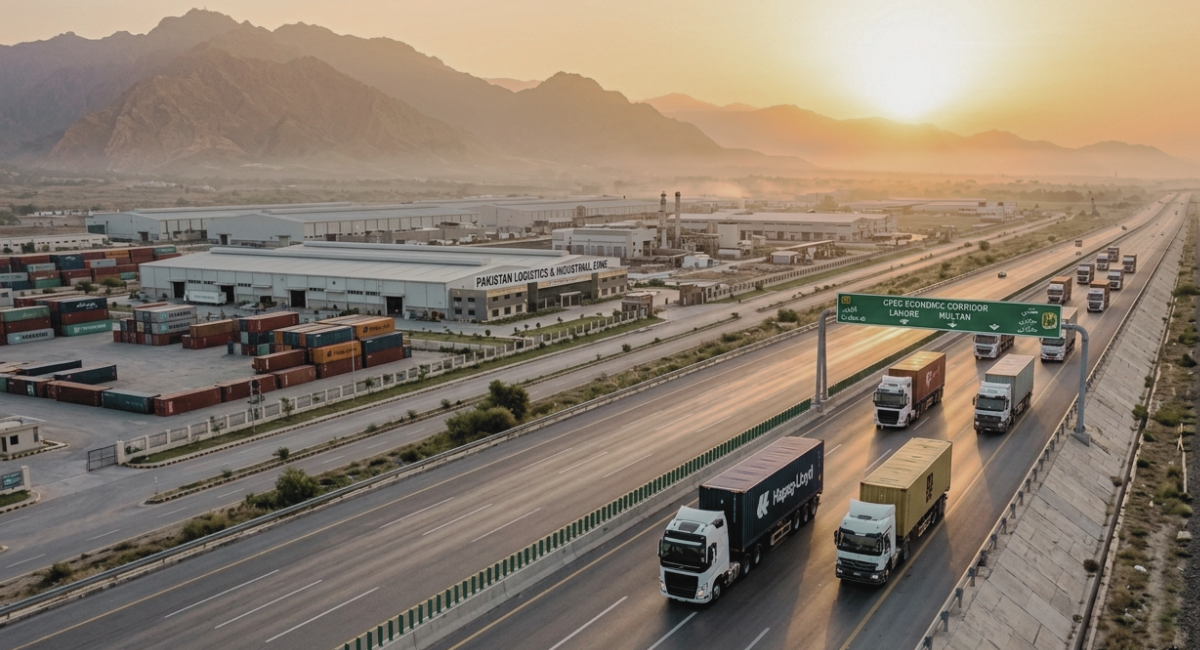
The Goods Transport and logistics framework serves as the definitive economic backbone of Pakistan. From the bustling marine terminals in Karachi to the industrial corridors of Punjab and the rugged, high-altitude northern passages of Gilgit-Baltistan, the nation’s socio-economic vitality depends entirely on a high-performing supply chain network.
In modern commercial commerce, freight forwarding extends far beyond the simple movement of cargo from one point to another. It encompasses complex multi-modal touchpoints, total transit-time mitigation, fleet asset utilization, and strict safety compliance frameworks. Driven by massive infrastructure investments like the China-Pakistan Economic Corridor (CPEC) motorways and specialized special economic zones (SEZs), freight distribution methods within Pakistan have evolved significantly. This strategic guide explores Pakistan’s premier logistics nodes, supply chain ecosystems, and structural freight optimization workflows necessary for maximum market penetration.
Geopolitical Dynamics of Pakistan’s Premier Logistics Hubs
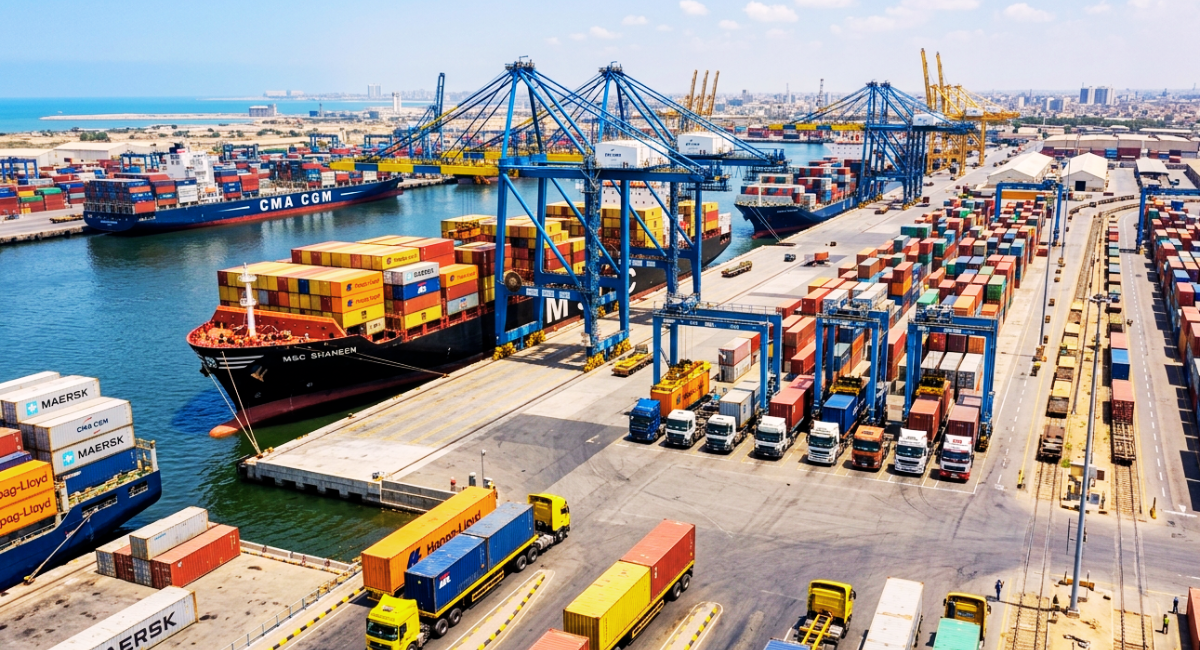
The domestic freight market operates fundamentally on a Hub-and-Spoke framework. Primary urban commercial centers handle massive bulk break-bulk operations, channeling incoming maritime and production cargo down regional supply lines to smaller satellite destinations.
1. Karachi: The Maritime and Raw Material Gateway
A massive majority of multi-modal movements originate with Goods Transport karachi. As home to the Karachi Port Trust (KPT) and Port Qasim, this coastal mega-city processes more than 80% of the country’s international trade imports and exports.
Karachi serves as the country’s core engine for heavy machinery hauling, bulk mineral distribution, and raw material forwarding. Logistical sub-hubs such as Maripur Road, Hawkesbay Road, and Yousuf Goth function as heavily active staging grounds. Thousands of heavy commercial vehicles (HCVs) mobilize from these areas daily to supply industrial clusters across Upcountry Pakistan.
2. Lahore: The Industrial and Consumer Distribution Heart
In upper regions, the apex distribution network revolves entirely around Goods Transport lahore. Lahore stands as a dominant manufacturing center and a vital geostrategic crossroads linking Central and Northern Punjab with Sindh and Balochistan.
Major industrial parks—including the Sundar Industrial Estate, Quaid-e-Azam Industrial Estate, and the industrial manufacturing stretches along Sheikhupura Road—rely on a structured, enterprise-grade Goods Transport company Lahore to guarantee lean inventory management. Freight staging centers like Badami Bagh and Thokar Niaz Baig act as the principal city corridors that regulate multi-axle freight vehicles and secondary city distribution fleets.
3. Islamabad and Multan: High-Yield Regional Hubs
-
Goods Transport islamabad: The twin-cities capital region (Islamabad-Rawalpindi) plays a vital gateway role for northern routes, including the primary CPEC Western Alignment, Hazara division, Azad Jammu and Kashmir, and cross-border trade pathways. The commercial freight yards in Sector I-10 form the primary infrastructure backing this north-bound freight flow.
-
Goods Transport multan: Positioned at the literal crossroads of southern Punjab, Multan commands agricultural logistics. Its transport matrix governs the domestic distribution of cash crops, cotton bales, seasonal fruits, fertilizers, and pesticide shipments, utilizing the Vehari Road hub to sustain agricultural supply lines nationwide.
The Lahore-to-Karachi Freight Corridor: Essential Workflows
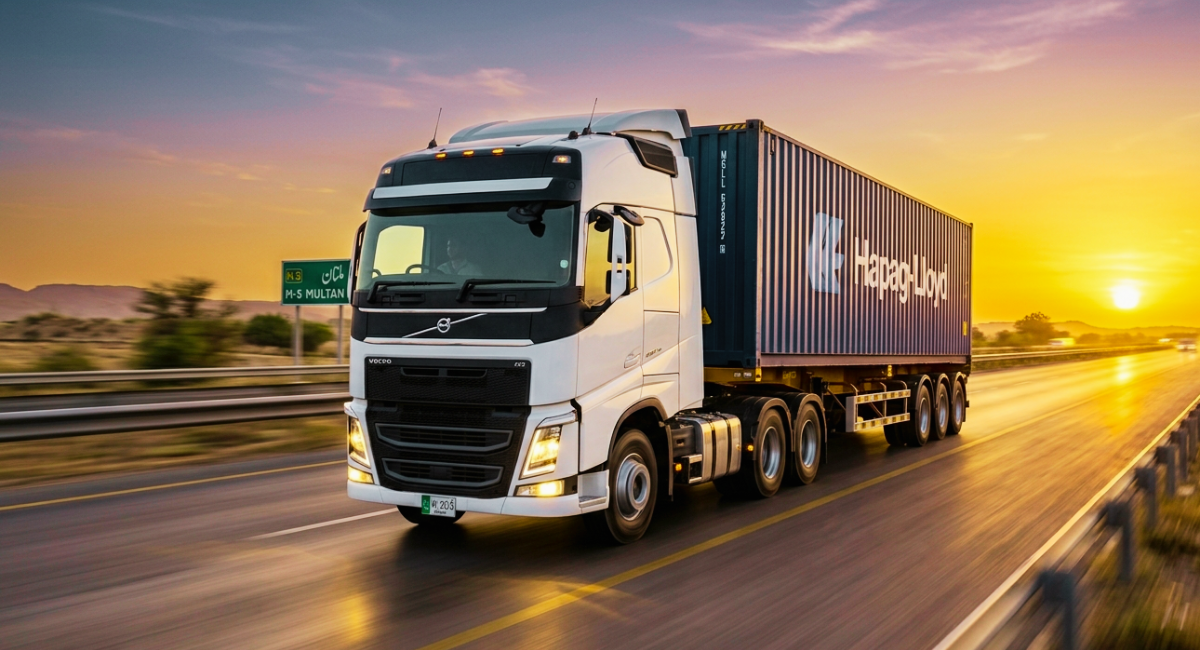
The most commercially dense lane in the Pakistani market is the Lahore to Karachi Goods Transport services corridor. This line acts as a crucial link connecting the country’s main seaport with its largest consumer marketplace.
+------------------+     M-9 / M-5 / M-4 / M-3 Motorway Network     +-----------------+
|  Karachi Ports   | =============================================> |  Lahore Hubs    |
|  (Raw Materials) | <============================================= | (Finished Goods)|
+------------------+             24 - 36 Hours Transit              +-----------------+
Route Optimization and Structural Shifts
Historically, primary freight vehicles utilized the single-lane bottlenecks of the National Highway (N-5), resulting in tedious transit windows stretching between 48 and 72 hours. The completion of interconnected multi-lane highway networks—specifically the M-3, M-4, M-5 (Sukkur-Multan), and the M-9 corridors—has dropped standard transit windows down to a reliable 24 to 36 hours.
| Route Choice | Average Transit Duration | Optimal Fleet Type | Primary Cargo Target |
| National Highway (N-5) | 36–48 Hours | Rigid Trucks, 6-10 Wheelers | Low-margin bulk items, industrial minerals, non-perishables |
| Motorway Network (M-5 / M-4) | 24–30 Hours | Prime Movers, ISO Box Containers | FMCG, electronics, high-value textiles, pharmaceuticals |
Operational Document Controls: The Bilty System
Securing freight safety along this primary trade route requires precise compliance with local transport laws. The operational foundation of any commercial freight movement is the Bilty (the localized variant of the formal Bill of Lading).
Legal & Logistic Significance: The Bilty represents a legally binding tri-party agreement executed between the consignor, the contracted freight carrier, and the consignee. It outlines precise cargo descriptions, weight metrics, values, and freight-payment structures. This document must accompany the vehicle along with appropriate Excise and taxation clearance permits to navigate highway check-points smoothly.
Fleet Capacity Mapping: Aligning Cargo with Vehicle Types
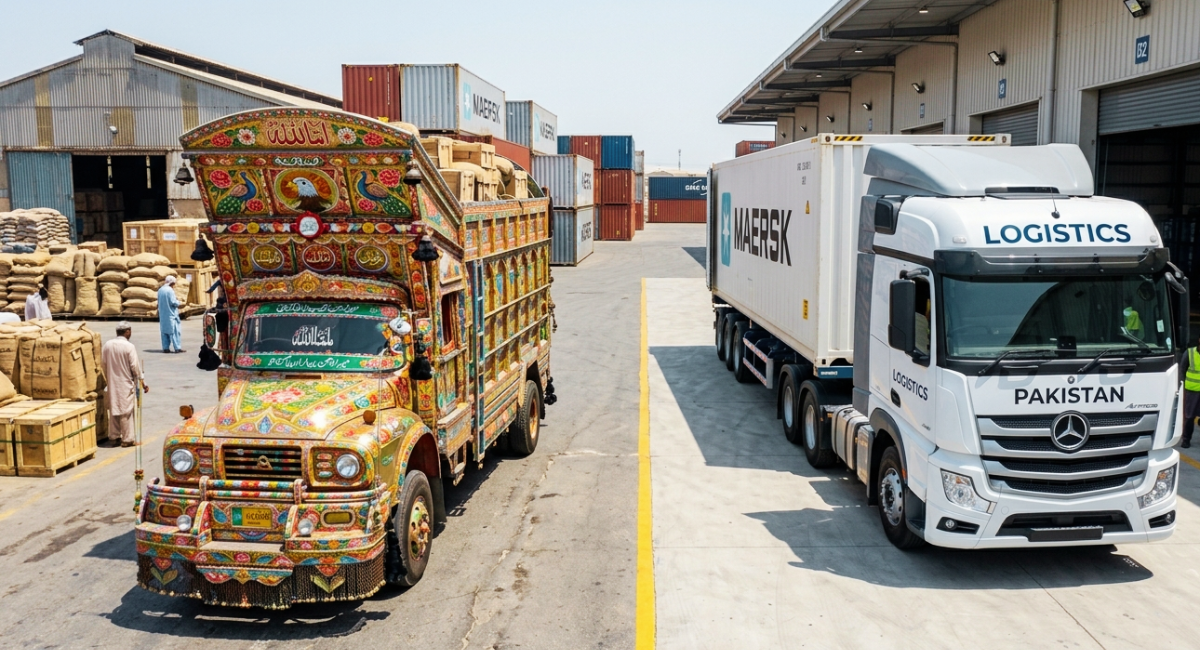
An efficient supply chain ensures that cargo density matches the exact vehicle configuration. Over-specifying a vehicle creates unnecessary fuel waste (dead mileage costs), while under-specifying causes vehicle fatigue and structural failures.
-
Light Commercial Vehicles (LCVs): Comprising mini-trucks like Suzuki pickups, Hyundai Shehzore, and Master Motors platforms. These units are built primarily for intra-city urban deliveries, last-mile distributions, and tightly constrained navigating conditions.
-
Medium-Duty Freight Trucks: Featuring standard 6-wheeler and 10-wheeler rigid configuration trucks (historically dominated by brands like Isuzu, Hino, and Nissan). These workhorses form the bedrock of mid-tier manufacturing and inter-city trade lanes.
-
Heavy-Duty and Specialized Hauling: Incorporating massive 22-wheeler articulated prime movers, flatbeds, low-bed trailers, and high-cube ISO shipping container frames. These configurations are used for major heavy industrial machinery imports, raw steel coil handling, and shipping container transport directly from port facilities.
On-Demand Logistics: The Rise of Hyperlocal Freight Booking
The digital transformation of the logistics sector has fundamentally modified shipping behaviors, especially among Small and Medium Enterprises (SMEs) and private traders. The widespread adoption of localized search strings like Goods Transport near me highlights a significant shift toward digital, spot-market freight sourcing.
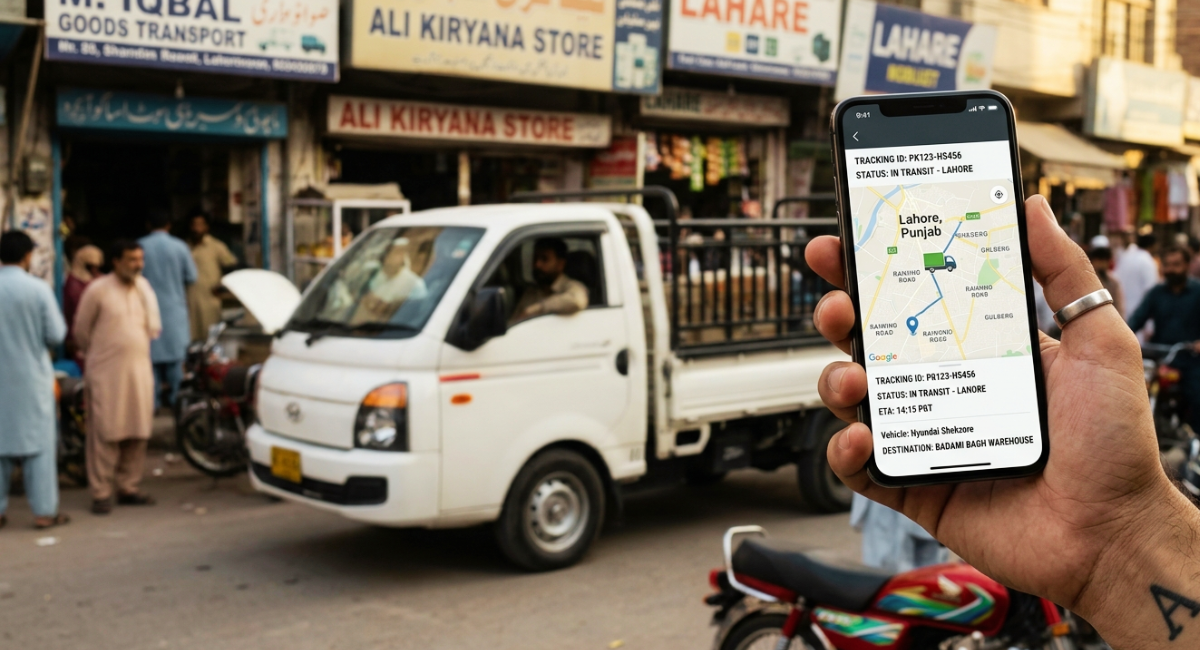
Hyperlocal transport demands close proximity and asset flexibility. By utilizing digital freight brokerages and localized fleet aggregation yards, shippers can secure nearby transportation quickly. This structure cuts down on initial empty runs and lowers fuel costs, enabling a much more agile response to sudden demand shifts.
Risk Mitigation and Regulatory Compliance in Logistics
Managing modern long-haul freight operations involves handling volatile operating environments and complying with strict regulatory rules.
1. Risk Coverage and Comprehensive Marine Insurance
Given the structural variables present across thousands of kilometers of diverse terrain, high-value freight movements protect financial interests by securing robust cargo insurance. Modern logistics operators manage transit risks by utilizing Marine Cargo Insurance and Inland Transit Insurance frameworks, insulating the shipper from losses stemming from vehicular accidents, cargo theft, or unforeseen climate delays.
2. The Impact of the National Axle Load Policy
Enforced carefully by the National Highway Authority (NHA), the Axle Load Policy limits the maximum gross vehicle weight allowed per axle on public roads.
This policy is designed to protect transport infrastructure from premature wear caused by chronic overloading. For commercial enterprises, this regulation requires migrating away from traditional single-axle modifications toward multi-axle tractor-trailer configurations. This shift ensures compliance while optimizing shipping costs per ton.
Frequently Asked Questions (FAQs)
1. How are freight rates determined for the Karachi-to-Lahore shipping corridor?
Freight rates are calculated using several factors, including gross cargo weight, total volumetric displacement, specialized handling requirements (such as temperature-controlled storage), current diesel fuel prices, and seasonal market demand. Rates typically peak during major agricultural harvest cycles and ahead of major national holidays.
2. Why is the Bilty document critical for intra-provincial transport?
The Bilty acts as proof of custody and a legally binding document. It verifies that the carrier has accepted the goods and holds title to transport them under specified terms. It protects all parties against cargo discrepancies and serves as the primary verification document for highway law enforcement and customs officials.
3. What specialized vehicles are used for transporting perishable food and cold-chain items?
Perishable foods, dairy products, and temperature-sensitive pharmaceuticals are transported using Reefer Trucks (Refrigerated Containers). These units run dedicated diesel-powered cooling systems that maintain steady sub-zero or chilled temperatures throughout the entire long-haul journey.
4. What is the difference between intra-city last-mile delivery and inter-city long-haul transport?
Intra-city transport focuses on localized delivery within a single metropolitan area, utilizing light commercial vehicles (LCVs) for quick, short-distance distribution. Inter-city transport involves moving large bulk cargo across provincial borders over long distances, requiring medium-to-heavy-duty trucks or articulated prime movers.
5. Do modern transport companies offer real-time shipment visibility?
Yes. Leading transport providers utilize advanced GPS-enabled fleet tracking software. These systems provide shippers with constant real-time location data, precise route adherence monitoring, and automated alerts for estimated time of arrival (ETA) changes.
Conclusion: Key Strategic Takeaways
The transport network in Pakistan is transitioning from a fragmented market into a more integrated, digitally enhanced asset class. Whether an enterprise is looking to secure efficient Goods Transport islamabad corridors or tap into agricultural distribution networks via Goods Transport multan, success requires choosing a capable logistics partner.
To maximize supply chain performance, businesses should look beyond basic shipping rates. Long-term profitability is driven by choosing transport providers that offer modern fleet options, verified legal documentation, comprehensive insurance tracking, and complete route visibility. Selecting a reliable logistics partner transforms transportation from a simple overhead cost into a strategic advantage that drives business growth.

Leave a Reply